The Problem with Traditional Laboratory Testing
Historically, laboratory methods to assess rumen buffers have been overly simplistic. Tests like static pH titration or hydrochloric acid (HCl) titration have been used to measure a buffer’s ability to neutralise acid. While these tests give some useful information, they don’t replicate the dynamic, continuous acid production that happens in the rumen.
For example, static pH titration involves adding acid to a buffer solution until a specific pH is reached. While it tells us about a buffer’s potential to neutralise acid, it doesn’t capture the constant fluctuations in rumen pH that happen during feeding. Similarly, HCl titration adds hydrochloric acid, a very strong acid, to simulate the acid flow in the rumen. However, hydrochloric acid doesn’t behave like the weaker, organic acids—such as acetic, propionic, and butyric acids—that are actually present in the rumen. As a result, traditional lab tests fail to provide an accurate picture of how a buffer will perform in the real world.
A More Accurate Approach: Replicating Rumen Conditions
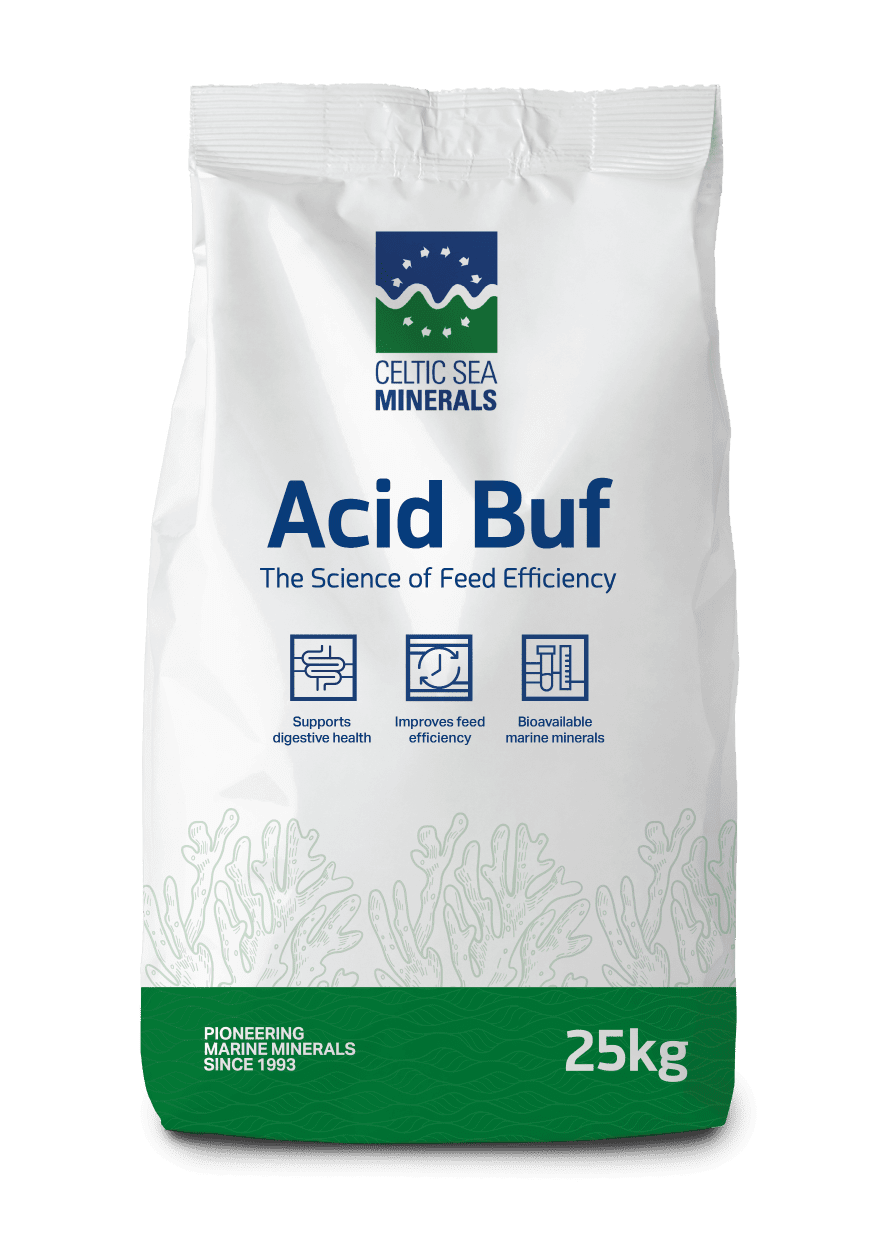
In their 2024 study, Quille et al. proposed a better way of testing rumen buffers by using acetic acid instead of HCl. Acetic acid is a major volatile fatty acid (VFA) produced in the rumen, making it a much more accurate representation of the ruminal environment. By simulating an acidotic diet with acetic acid, Quille et al. were able to create a testing method that closely mimics the actual conditions inside the rumen. What’s more, they based this method on work done in an animal study by Neville et al. which measured VFAs and pH using a rumen bolus. This new approach allowed researchers to better assess how different buffers, like Acid Buf, perform under realistic conditions.
The acetic acid-based test more accurately replicated the rapid fluctuations in rumen pH, which are crucial for determining how effective a buffer will be in stabilising rumen conditions. The study showed that buffers that had performed well in traditional tests, such as sodium bicarbonate, might not be as effective when used in real-world rumen conditions, especially when the pH drops below 6.3.
The Advantages of Acid Buf for Preventing SARA
The findings from the study highlight the importance of selecting the right buffer for managing SARA. Acid Buf has proven to be an effective rumen buffer. Unlike sodium bicarbonate, Acid Buf maintains its effectiveness. This is crucial for preventing the onset of SARA in cows that are on high-starch, low-fibre diets.
What makes Acid Buf particularly effective is its unique composition, which includes a higher magnesium content, greater organic matter % and larger surface area that provide prolonged buffering action. This ensures a more stable pH in the rumen, reducing the risk of acidosis and the associated health problems.
Summary
As dairy farmers continue to face challenges associated with managing rumen health, it’s clear that improving laboratory methods for testing rumen buffers is key. Traditional methods, like static pH and HCl titration, don’t capture the dynamic nature of the rumen environment, leading to less reliable results. By adopting more accurate testing protocols, such as those used in the acetic acid-based simulation, we can select buffers that perform better in real-world conditions.
Acid Buf stands out as a reliable solution for managing rumen pH and preventing SARA. By using buffers that are tested under more realistic conditions, dairy farmers can improve herd health, increase milk yield, and reduce the risk of costly health problems. So, the next time you’re evaluating rumen buffers, remember that accurate testing is just as important as choosing the right buffer for your cows’ health.
Understanding how different buffers behave in the rumen is crucial for effective herd management. With better lab methods that are more representative of real-world applications, and products like Acid Buf, dairy nutritionists can continue to drive health and profitable production.