Feed Efficiency and Dairy Sustainability
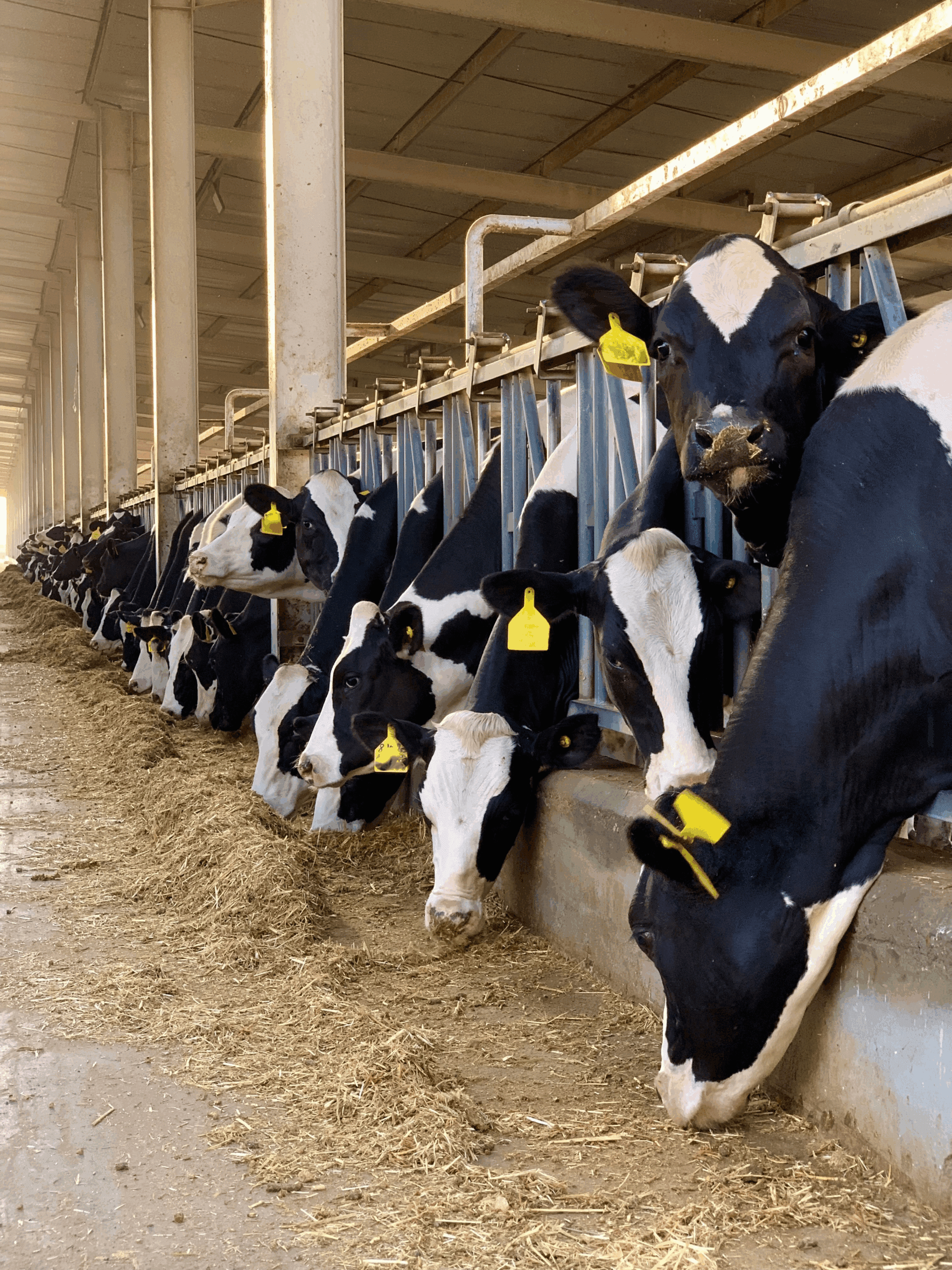
Improving feed efficiency does more than just increase output – it plays a major role in lowering the environmental footprint of dairy production. More efficient cows produce less methane and require fewer feed inputs per litre of milk.
Better feed utilisation also means less land is needed for feed crops, a key advantage in the context of global food security. And as feed costs represent a significant portion of total production expenses, more efficient conversion can significantly boost margins.
The Role of the Rumen in Feed Efficiency
Central to feed efficiency is the function of the rumen – the fermentation chamber where billions of microbes break down feed. Traditionally, dairy nutrition has focused on maximising dry matter intake (DMI) to drive production. But simply pushing for more intake can be counterproductive.
As DMI increases, feed spends less time in the rumen, leading to reduced digestibility and nutrient absorption. This “law of diminishing returns” means that more is not always better.
Instead, an optimum balance must be found – one where the rumen microbial population remains stable and effective at digesting starches, fibres, and sugars.
This is where rumen pH plays a vital role.
Managing Rumen pH to Prevent Acidosis
Rumen microbes are highly sensitive to pH. If rumen pH drops too low – a condition known as sub-acute ruminal acidosis (SARA) – microbial populations become imbalanced. Fibre-digesting microbes struggle to survive, leading to poorer digestion, lower milk fat production, and increased risk of health issues.
To avoid these outcomes, it’s essential to maintain a stable rumen pH. This can be achieved by:
- Including sufficient physically effective fibre in the diet
- Controlling levels of rapidly fermentable carbohydrates like sugars and starches
- Using rumen buffers to support microbial stability and pH balance
Acid Buf: A Natural Rumen Buffer for Dairy Cows
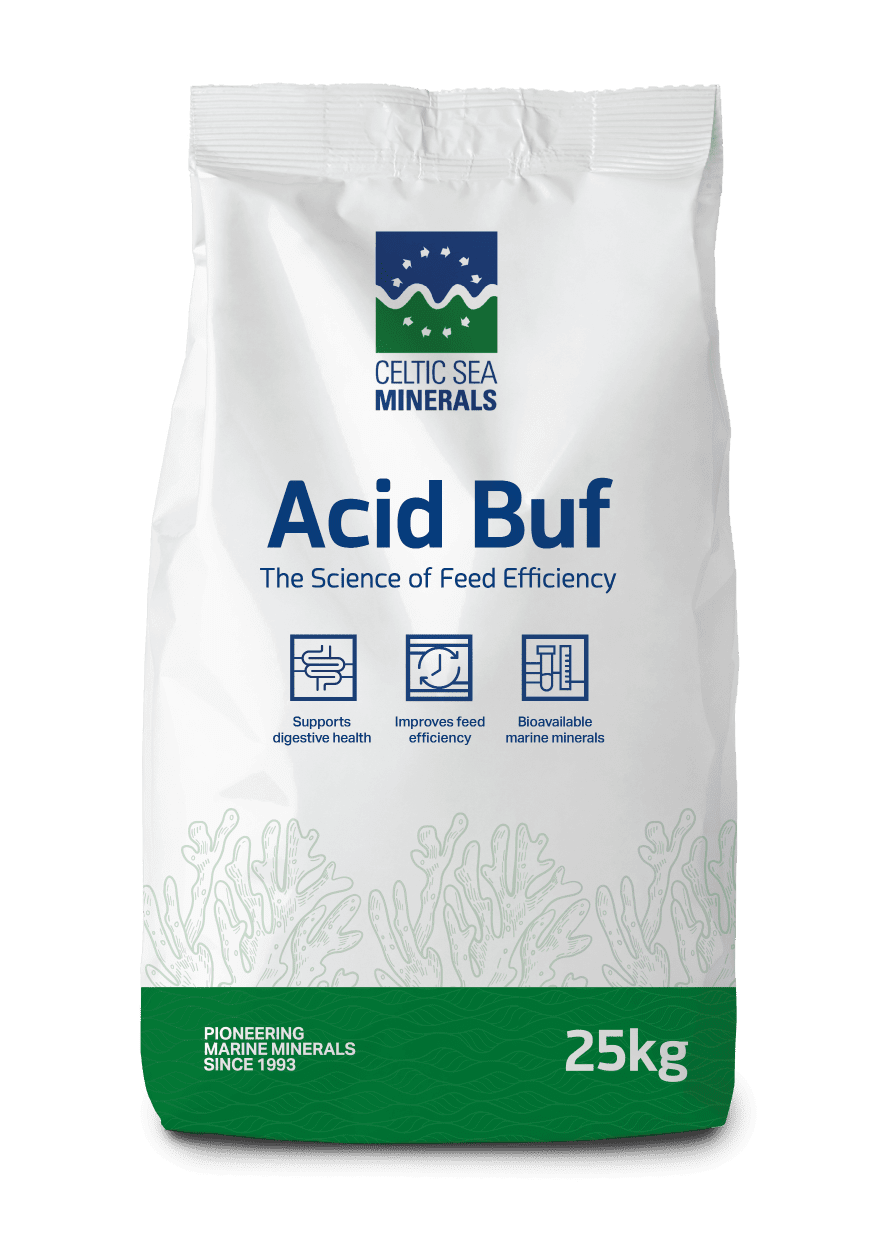
One rumen buffer gaining widespread attention is Acid Buf, a natural marine-derived product from Celtic Sea Minerals. Acid Buf is a complex source of over 70 bioavailable minerals and has been shown in multiple studies to:
- Stabilise rumen pH
- Improve feed efficiency
- Reduce the risk of rumen acidosis
- Increase milk yield and solids
Global Research Supporting Acid Buf
- University of Georgia (USA)
In early-lactation Holsteins, 90g/day of Acid Buf increased ECM by 0.2 kg per kg of DMI, outperforming both control and sodium bicarbonate treatments (Bernard et al., 2014).
- Stellenbosch University (South Africa)
In a high-starch diet, Acid Buf improved FCM by 0.24 kg per kg DMI compared to control, and by 0.17 kg versus sodium bicarbonate (Cruywagen et al., 2015).
- University College Dublin (Ireland)
In a mid-lactation trial on a ryegrass and maize silage-based TMR, Acid Buf improved ECM by 0.13 kg per kg DMI versus sodium bicarbonate (Neville et al., 2019).
These studies spanned three different continents and feeding systems – yet all reported consistent gains in feed efficiency with Acid Buf inclusion.
Economic and Environmental Impact
Even small improvements in milk production efficiency can add up. For example, a gain of 0.1 kg ECM per kg DMI could increase milk revenue by almost one euro.
At scale, this has a profound impact not just on profitability, but also on reducing:
-
- Methane emissions
- Manure output
- Land and water use for feed production
Rethinking Dairy Nutrition for Efficiency
To drive long-term success, dairy producers need to shift focus from maximum intake to optimum efficiency. This means formulating diets that:
- Support rumen health
- Maintain a stable pH
- Foster a balanced microbial ecosystem
Rumen buffers, like Acid Buf, are proving to be highly effective tools for achieving this balance.
Key Takeaways
- Feed efficiency is vital for profitability and sustainability in dairy production.
- Rumen health is central to feed efficiency – especially stable rumen pH.
- Acid Buf is a natural rumen buffer proven to improve feed efficiency in multiple global studies.
- Optimising feed efficiency reduces feed costs, environmental impact, and supports better animal health.
Acid Buf offers dairy producers a proven solution to:
- Increase milk yield per kg of feed
- Support healthy rumen function
- Reduce the risk of acidosis in dairy cows
- Align with global agricultural sustainability goals