The Importance of Rumen pH for Feed Efficiency and Methane Reduction
A well-balanced rumen is key to both animal performance and environmental sustainability. Rumen pH plays a critical role in microbial activity, feed digestion, and energy utilisation.
- If rumen pH is too high (>6.2): Fibre digestion is supported, but fermentation slows down, leading to a longer passage rate of feed. This can limit intake and reduce overall performance.
- If rumen pH is too low (<5.6): The risk of acidosis increases, which negatively affects fibre digestion and feed efficiency. Low rumen pH is also associated with reduced milk fat production, as it alters fermentation patterns and limits acetate availability, a key precursor for milk fat synthesis.
Maintaining an optimal and stable rumen pH supports beneficial microbial populations, improves feed conversion, and reduces methane output.
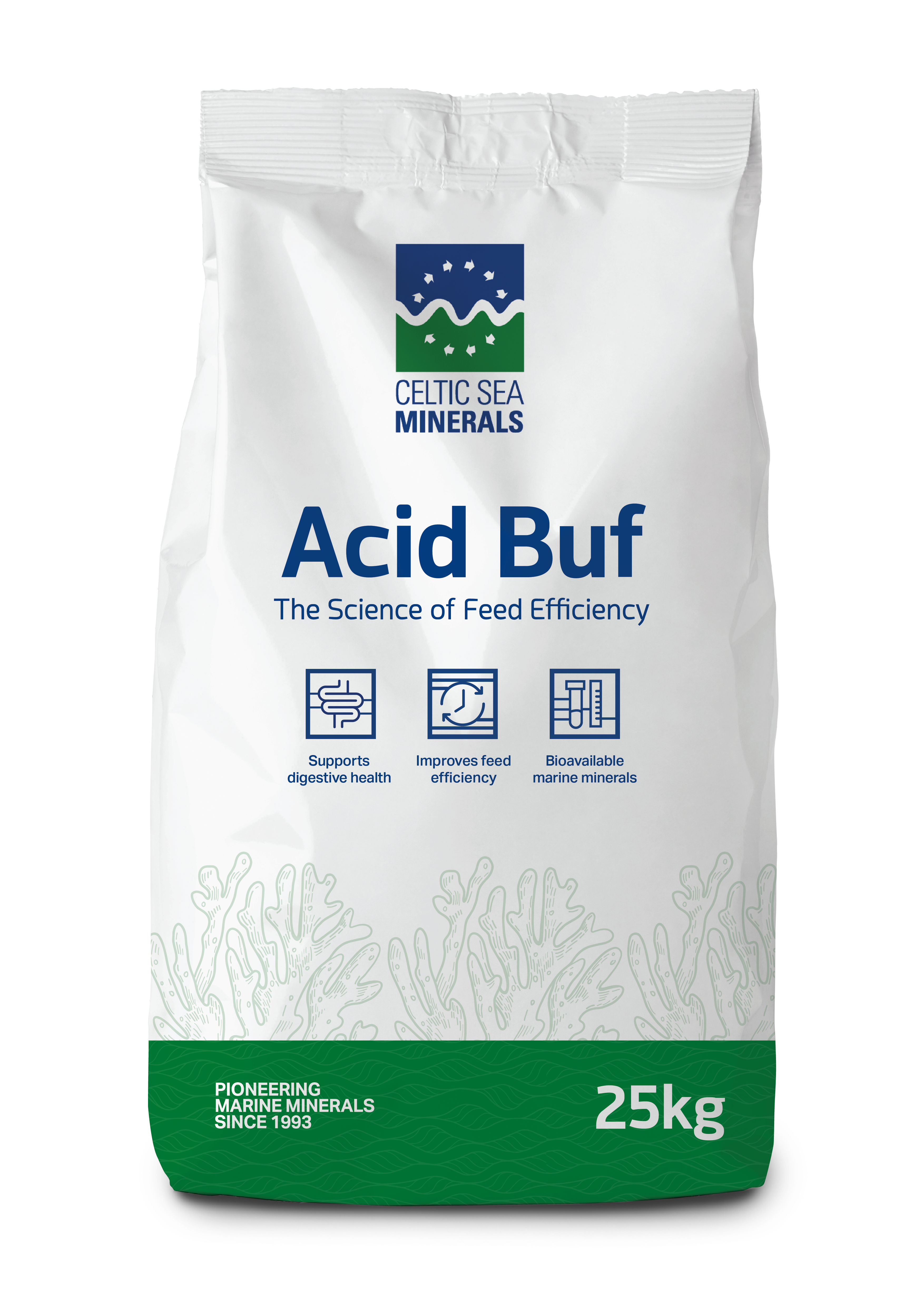
Acid Buf: A Smarter Buffer for Rumen Stability
Acid Buf, derived from calcareous marine algae, offers a superior alternative to traditional buffers such as sodium bicarbonate. Unlike quick-acting buffers, Acid Buf provides a slow-release, long-lasting pH-stabilising effect, ensuring a more balanced rumen environment throughout the day.
How does Acid Buf help?
- Reduces pH fluctuations – Helps maintain stability, reducing time spent below pH 5.6 and lowering the risk of acidosis.
- Reduces methane emissions – Studies have shown that Acid Buf can lower methane output while supporting productivity.
Scientific Evidence: Acid Buf’s Impact on Methane and Efficiency
Research has demonstrated that Acid Buf delivers measurable benefits in reducing methane emissions and improving efficiency.
- Lab study (Durmic et al., 2013): Found a 28% methane reduction in rumen fluid cultures supplemented with Acid Buf.
- Animal trials (Garnsworthy et al., 2025): Recorded methane reductions of 4.8% and 3.5% in cattle, with further studies showing similar results.
Beyond methane reduction, Acid Buf also enhances overall performance:
- Improved feed conversion ratio (FCR): Animals fed Acid Buf saw a 9% better FCR compared to those on sodium bicarbonate.
- Higher milk fat production: Cows supplemented with Acid Buf produced 8% more milk fat per day than those receiving sodium bicarbonate.
Acid Buf: More Than Just a Buffer
Recent research has highlighted additional benefits of Acid Buf beyond pH regulation. A study by Neville et al. (2022) found that Acid Buf helps reduce serum amyloid A (SAA), lowering inflammation in transition cows. This suggests broader benefits for overall health and performance.
With increasing pressure to cut methane emissions while maintaining efficient dairy production, Acid Buf provides a dual advantage — enhancing feed efficiency while supporting sustainability. For producers looking to optimise nutrition and reduce their environmental footprint, Acid Buf is a valuable addition to a well-balanced feeding strategy.