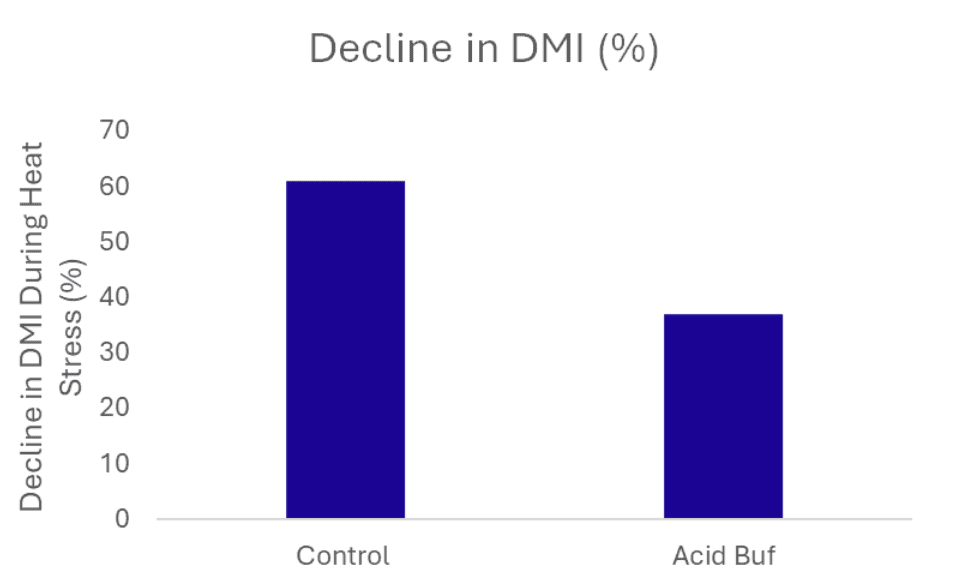
Comparison of dry matter intake decline between control and Acid Buf supplemented steers.
This is particularly important because maintaining feed intake during stressful periods is closely linked to preserving energy balance, supporting metabolic function, and limiting production losses. The researchers also noted that cattle receiving Acid Buf returned to baseline intake levels more rapidly during the recovery phase, while control cattle continued to lag behind.
Beyond feed intake, the study identified notable differences in markers associated with inflammation and immune activation. Researchers measured Serum Amyloid A (SAA) and Lipopolysaccharide Binding Protein (LBP), both of which are commonly associated with systemic inflammation and compromised gut integrity. Steers supplemented with Acid Buf consistently recorded lower concentrations of both markers compared with control cattle.
These findings suggest that Acid Buf may help moderate the inflammatory cascade often associated with digestive stress. Lower inflammatory activity is significant because immune activation requires substantial energy, diverting nutrients away from growth and performance and towards maintaining physiological stability.
The study also highlighted observations related to gastrointestinal health. Researchers reported greater evidence of gut epithelial shedding in control cattle, while steers receiving Acid Buf showed indicators consistent with improved gut integrity and more stable faecal consistency. Maintaining the integrity of the gastrointestinal tract is increasingly recognised as critical in feedlot cattle, particularly in high-concentrate feeding systems where disruptions to rumen and intestinal function can quickly compromise performance.
Importantly, the benefits observed were not limited to digestion alone. The study also demonstrated differences in biomarkers associated with liver function and metabolic stress. Control cattle recorded higher levels of liver enzymes such as AST and GLDH during the recovery phase, while Acid Buf supplemented cattle generally maintained lower enzyme activity. Elevated concentrations of these enzymes are commonly associated with increased tissue stress and metabolic strain, suggesting that Acid Buf may have helped support recovery and physiological resilience.
In addition, cattle supplemented with Acid Buf maintained higher blood glucose concentrations compared with control cattle during both the challenge and recovery periods. This may indicate improved energy availability and metabolic stability during periods where cattle are typically under greater physiological pressure.
Traditionally, Acid Buf has been recognised primarily as a rumen buffering ingredient used in high-concentrate diets. However, the findings from Sammes et al. suggest its role may be far broader. The combination of improved feed intake, lower inflammatory markers, better indicators of gut integrity, and reduced signs of liver stress points towards a more comprehensive systemic benefit.
As feedlot systems continue to face increasing environmental and nutritional challenges, supporting resilience at both rumen and systemic levels is becoming more important than ever. The results from this study suggest that Acid Buf may offer producers a valuable nutritional tool not only for buffering rumen conditions, but also for helping cattle maintain performance, recovery, and metabolic stability during periods of stress.